Carbon Emissions Accounting in China's Film and Television Industry Supply Chain: Hierarchical Estimation and Sectoral Source Decomposition
Keywords:
film and television industry, input-output analysis, scope 3 emissions, carbon emission multiplier, supply chainAbstract
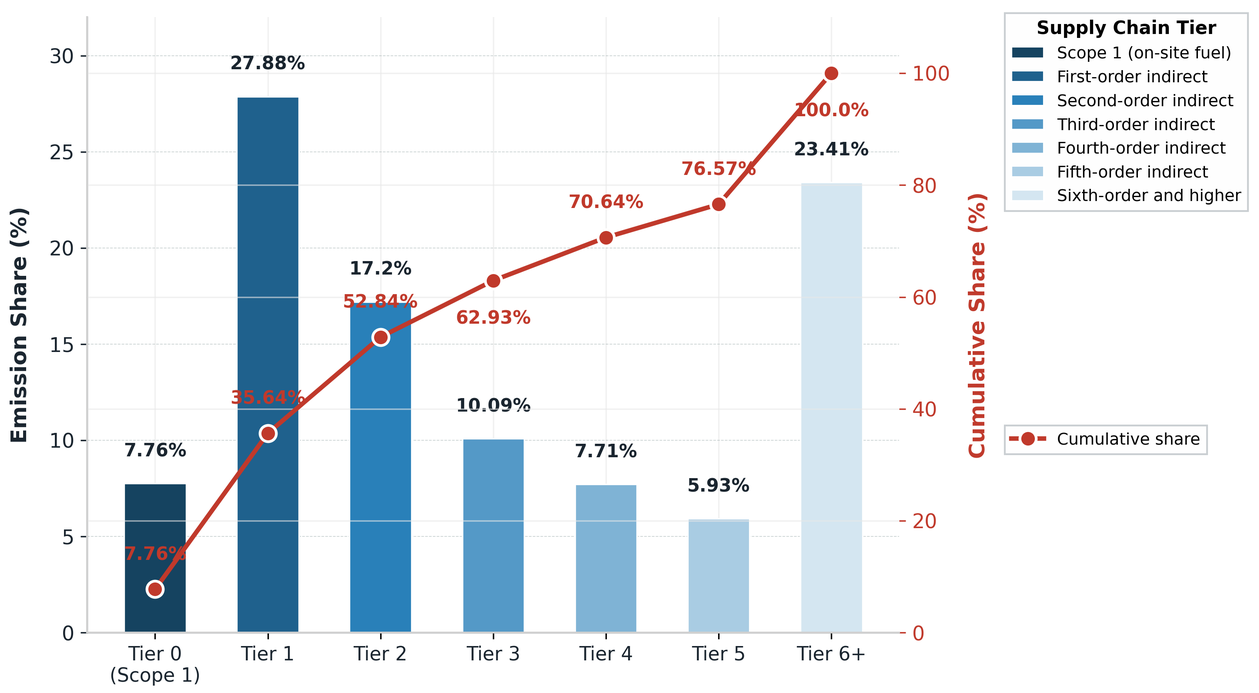
Against the backdrop of China's “dual carbon” goals, the green and low-carbon transition of the film and television industry has become increasingly urgent. However, existing research lacks systematic quantification of indirect emissions along the industry's supply chain. Based on China's 2023 input-output tables with 211 sectors, this study employs environmentally extended input-output analysis (EEIOA) and, for the first time, systematically applies it to account for the carbon footprint of China's film and television industry. It further conducts a hierarchical estimation and sectoral source decomposition of supply chain emissions. The study finds that the total carbon footprint of the film and television industry is several times larger than its direct emissions; supply chain emissions exhibit a “long-tail” distribution, with higher-order indirect emissions accounting for a substantial share; and film- and television-related service sectors serve as key emission nodes. This research offers a replicable carbon footprint accounting framework for the industry, reveals a service-intensive hidden carbon structure that shifts emission responsibilities across the supply chain, and provides data support for establishing green production standards, optimizing supply chain management, and improving ESG disclosure.