Development Trends of Garment Pattern Blocks Based on Sustainable Concepts: A Case Study of Raglan, Set-in, and Gusseted Sleeve Prototypes
Keywords:
Garment Construction, Sustainable Development, Production ManagementAbstract
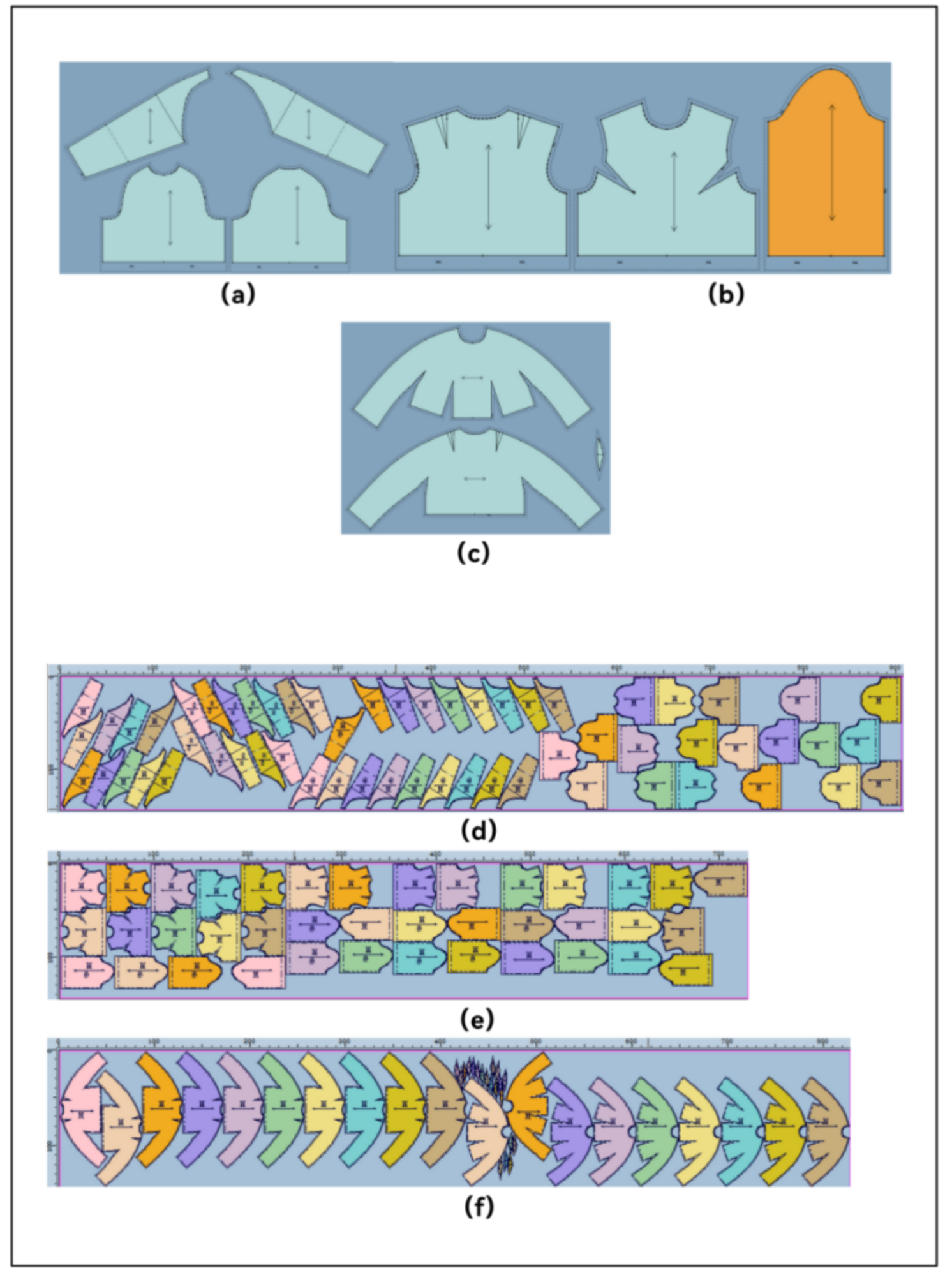
Under the context of sustainable development, the garment industry urgently requires structural innovation to reduce resource waste and environmental impact. Current sustainable practices in the industry predominantly focus on material development, while systematic exploration of garment structural optimization remains insufficient. This study examines three fundamental pattern blocks—raglan sleeve, set-in sleeve, and gusseted sleeve—comparing their marker efficiency and fabric consumption across two fabric widths: 145cm and 180cm. Results indicate that the set-in sleeve pattern achieves the highest fabric utilization rate (81.26% for 180cm width) and the lowest fabric consumption, demonstrating clear advantages over raglan and gusseted sleeves. Further analysis reveals that the regularity of pattern pieces and layout flexibility are key factors influencing utilization rates. While increased fabric width generally enhances efficiency, its optimizing effect on complex structural patterns remains limited. Cost simulation further suggests that optimized pattern selection and marker planning could yield annual cost savings in the millions for medium-sized enterprises. Moreover, the evolution of pattern structures is driven by manufacturing technology, social consciousness, and market demand. Their refined application in sustainable design not only reduces resource waste but also enhances product differentiation and brand value. This research provides the apparel industry with a structural innovation-based pathway toward sustainable development, emphasizing the synergistic enhancement of economic efficiency and environmental responsibility through scientific design paradigm allocation and refined management.