Research on the Form Design of a Female-Specific ECG Garment Based on a Single-Lead System
Keywords:
Portable, Monitoring Devices Design, ECG GarmentAbstract
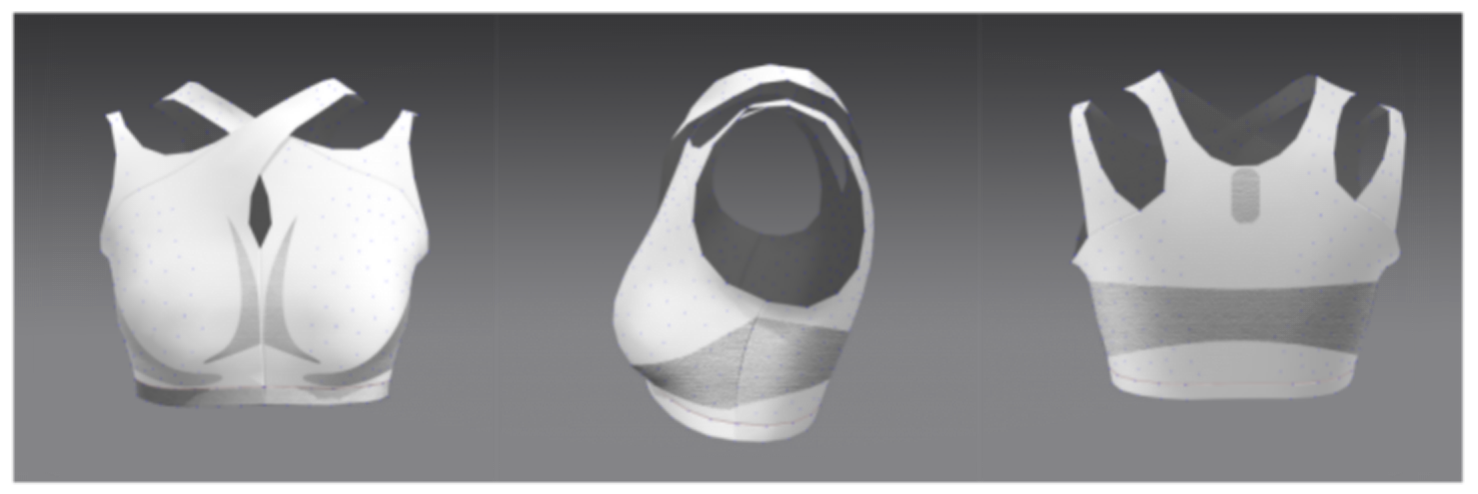
Objective: With the intensifying challenges of an aging population and the growing burden of cardiovascular diseases, there is an urgent need for long-term, dynamic cardiovascular monitoring technologies. Female users, in particular, face significant limitations due to anatomical constraints posed by the female breast, leading to numerous issues with existing ECG garments. This study aims to address two critical problems in current ECG garments during prolonged wear: the susceptibility of electrode positions to shift and the high risk of skin irritation, thereby enhancing monitoring accuracy, comfort, and user compliance. Methods: This research proposes a comprehensive optimization solution by integrating ergonomics, materials science, and structural design. Firstly, based on an analysis of spinal biomechanics, the T5-T9 thoracic vertebra region was identified as the most stable anchor area for electrodes, being least affected by body movement. Secondly, traditional wet electrodes were abandoned in favor of conductive textiles as the electrode material to improve breathability and reduce the risk of skin allergies. Finally, structural innovations were implemented via a dual-shoulder strap design and a laminated sealing process to distribute movement-induced stress and securely fix the electrodes and wiring. Results: An optimized prototype of the ECG garment was designed and developed. By precisely positioning the electrodes over bony landmarks, utilizing highly breathable materials, and incorporating a stable structure, this design effectively reduces motion artifacts and electrode displacement while significantly improving comfort during long-term wear. Through the synergistic optimization of electrode placement, materials, and structure, this study lays a foundation for achieving accurate, comfortable, and long-term dynamic ECG monitoring, facilitating the evolution of wearable medical devices from consumer-grade tracking to medical-grade diagnostics.