Research on Digital Design of Peking Opera Costumes Based on Parametric Flexible Sensing Interaction System
Keywords:
Parametric design, Flexible capacitive sensors, Self-sensing interfaces Cultural heritage digitization, Auxetic metamaterialsAbstract
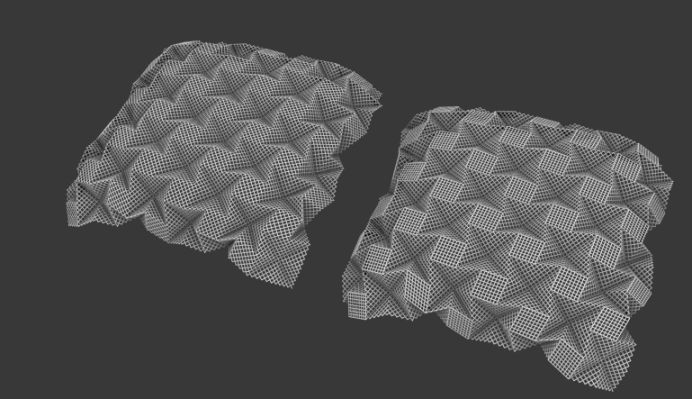
Traditional Peking Opera costumes embody profound cultural symbolism, yet their contemporary preservation remains constrained by static exhibition paradigms. This study introduces an interdisciplinary digital design framework that structurally integrates parametric design, flexible sensing, and multi-material 3D printing into theatrical apparel, focusing on the dynamic reconstruction of Wudan roles. By deconstructing the stylized kinetics of Wudan performances, we establish an algorithmic pipeline using Grasshopper to optimize an auxetic sensing topology based on the Miura-Ori origami pattern. The self-sensing garment is fabricated using a multi-material hybrid printing workflow: Selective Laser Sintering (SLS) generates a highly flexible TPU structural substrate, while Fused Deposition Modeling (FDM) deposits conductive paths to form multi-layered capacitive strain sensors. Finally, a node-based interactive rendering system is implemented in TouchDesigner to map transient joint movements and capacitance fluctuations into real-time responsive virtual particle visual effects. This system achieves a seamless symbiosis between bodily kinetics and virtual imagery, offering a practical reference for the living inheritance and intelligent interactive expression of intangible cultural heritage.